Category: SAP

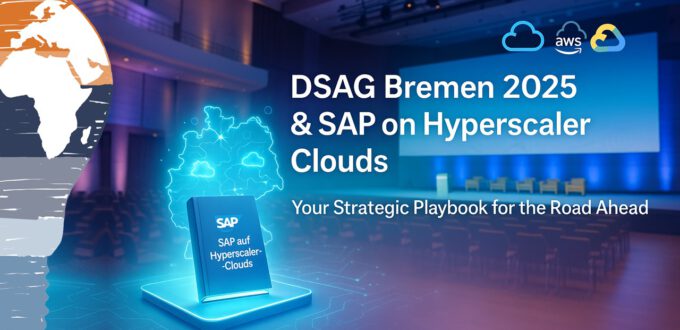
  • DSAG Bremen 2025 & Why SAP auf Hyperscaler‑Clouds Belongs in Every SAP Strategy Bag

    DSAG Bremen 2025 & Why SAP auf Hyperscaler‑Clouds Belongs in Every SAP Strategy Bag


    ♨️ DSAG Bremen 2025
    & Why SAP auf Hyperscaler‑Clouds Belongs in Every SAP Strategy Bag


    It’s that time of year again! The DSAG Annual Congress is coming to Bremen again from September 16‑18, 2025 and for every SAP user, consultant, partner, or technologist in the German‑speaking world, this event is an anchor point.

    If you ask me, there’s no better occasion than DSAG Bremen to reflect, to learn, and to sharpen your strategy. And in that spirit, I want to talk about how my book SAP auf Hyperscaler‑Clouds fits into what’s happening now and why it might be more relevant than ever.


    What Makes DSAG Bremen So Special in 2025


    • Over 5,500 participants expected: users, decision makers, SAP experts, partners. A melting pot of real use‑cases, challenges, and visions.
    • 175+ exhibiting partners showcasing SAP trends, solutions, and the future path from ECC to S/4HANA, from on‑premise to cloud, from legacy custom code to modern architectures.
    • Keynotes, expert sessions, workshops—for both business & IT. Deep dives into transformations, migrations, hyperscaler partnerships, governance. This is not just “see the product demos”, but “hear war stories and lessons learned.”

    The theme this year emphasizes what many companies are wrestling with: finding balance—between innovation and stability, between speed and risk, between regulatory constraints and cloud opportunity.


    Why SAP auf Hyperscaler‑Clouds Matters Right Now


    You might already know the book, but here are a few reminders and updates that connect with what you’ll see, hear, and discuss at DSAG:

    • The book, co‑authored by Steffi Dünnebier and myself, gives you practical guidance on migrating SAP workloads to hyperscaler clouds: Azure, AWS, Google. It covers architecture, integration, operations, and especially how to keep workflows, reliability, compliance intact. Rheinwerk Verlag
    • In the book, we argued that ECC / ERP 6.0 support (mainstream + extended) was heading toward 2027 / 2030 as hard deadlines. Many enterprise users built their plans accordingly. With recent SAP announcements (e.g. private edition transition options), some of those timelines are getting more flexible—but only if you prepare now. See details here.
    • The book includes best‑practices for hybrid scenarios, governance, cost control, automation for operations, and how to partner with hyperscalers. For those attending DSAG, you’ll hear many of these topics echoed: cloud architecture, shift to managed services, balancing cost, compliance, performance.

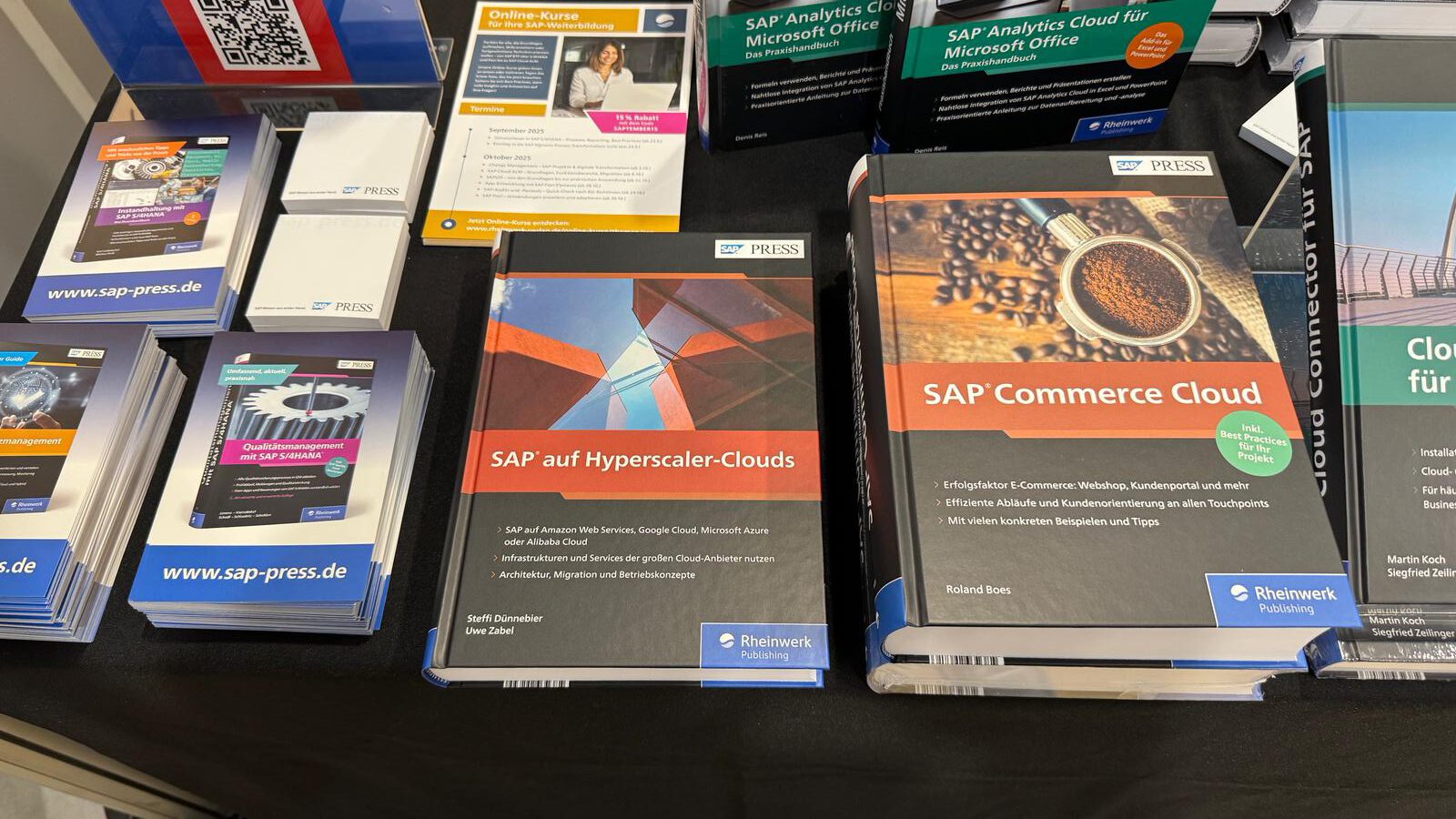
    And if you do not have a copy yet, get yours at the Rheinwerk booth on the DSAG

    What I’ll Be Looking for at DSAG—Bonus Value for Readers


    At DSAG in Bremen, I’ll be listening for:

    • How many users are going with SAP ERP Private Edition Transition Options to get more time, instead of rushing into full S/4 migrations.
    • Stories from the field: what worked, what failed in early hyperscaler migrations—especially in regulated industries, manufacturing, public sector.
    • How hyperscalers are partnering (or being asked to partner) more deeply, not just for infrastructure, but for managed services, automation, operations and security.
    • What kinds of governance frameworks and migration paths are being adopted—because even when you move to cloud, complexity (custom code, integration, data) doesn’t go away.

    These are exactly the kinds of insights that are in SAP auf Hyperscaler‑Clouds, but live, current, discussed in panels and over coffee.


    What This Means for Enterprise Clients


    If you live in the world of SAP enterprise, DSAG/Bremen + my book give some powerful signals:

    1. You can adjust your roadmap – The shock of “you must migrate by 2030 or else” is softening a bit, giving more breathing room. But breathing room doesn’t equal infinite delay—you still need momentum.
    2. Cost of delay vs cost of being first mover – Delaying carries costs: security, innovation, opportunity. Being early helps benefit from hyperscaler efficiencies, modern best practices, cloud native services.
    3. Choosing partners wisely – Hyperscaler infrastructure is one piece—who supports you in monitoring, in upgrade cycles, in custom code refactoring, in DevOps and operations matters.
    4. Governance, compliance and business continuity are not optional. When you shift SAP core systems to cloud or private edition, you must ensure SLA, auditability, performance, and disaster recovery are rock solid.

    What Hyperscalers (Microsoft, AWS, Google) Should Be Doing


    From the supply side, here are some thoughts:

    • Make pre‑built migration tooling and best practices widely available. Show reference customers. Make proof‑points.
    • Provide flexible licensing / cost models that account for phased migration, mixed landscape (on‑prem + private cloud + public cloud), and long‑tail support, especially for edge cases and verticals.
    • Invest in managed services around SAP operations (patching, monitoring, performance), security, compliance, and training. Many companies will evaluate clouds not just on infrastructure but on the operational burden.
    • Highlight reliability, compliance, data locality, sovereignty—because many SAP users care deeply about those, especially in DACH region.

    Looking Forward: DSAG + SAP auf Hyperscaler‑Clouds = Better Strategy


    If you’re heading to DSAG in Bremen:

    • Bring your book. Use it as inspiration what you ask in vendor‑booths and panels.
    • Attend sessions on SAP migrations and cloud strategy—compare what the book describes with what companies are doing.
    • Use DSAG to build your network with peers who are doing actual migrations; lessons there will often be more practical than anything you read.
    • Use the extra input you gather to refine your internal roadmap—update your stakeholders with real cost/benefit, risk assessments, and phased plans.

    Because SAP auf Hyperscaler‑Clouds isn’t just theory—it is a playbook for what many SAP shops will be facing over the next few years. And DSAG Bremen gives you the chance to confirm, challenge and sharpen that playbook live.

    Whether you’re in Hall 6 at a partner booth, in a session room, or over coffee in Bremen—I can’t wait to see how the future of SAP + hyperscaler clouds takes shape.

    Stay clever. Stay responsible. Stay scalable.
    Your Mr. Microsoft,
    Uwe Zabel


    🚀 Curious how SAP deadlines, cloud migration and the hyperscaler ecosystem are evolving in real time? Follow my journey on zabu.cloud—where cloud, AI, and business strategy converge.
    Or ping me directly—because building the future works better as a team.

  • SAP-Buchvorstellung auf der DSAG Jahreskonferenz

    SAP-Buchvorstellung auf der DSAG Jahreskonferenz


    SAP-Buchvorstellung auf der DSAG Jahreskonferenz


    Am 20.09.2023 wurde unser Buch “SAP auf Hyperscaler-Clouds” endlich auf dem DSAG-Jahreskongress erstmals veröffentlicht. Und die Zeit verging wie im Fluge.

    Einmal im Jahr findet der DSAG-Jahreskongress statt. Dort treffen sich die DSAG-Arbeitsgruppen und lassen das Jahr Revue passieren. Darüber hinaus stellt SAP die Strategien der nächsten Monate vor und informiert zu aktuellen Themen.

    (more…)

    SAP-Buchvorstellung auf der DSAG Jahreskonferenz


    Am 20.09.2023 wurde unser Buch “SAP auf Hyperscaler-Clouds” endlich auf dem DSAG-Jahreskongress erstmals veröffentlicht. Und die Zeit verging wie im Fluge.

    Einmal im Jahr findet der DSAG-Jahreskongress statt. Dort treffen sich die DSAG-Arbeitsgruppen und lassen das Jahr Revue passieren. Darüber hinaus stellt SAP die Strategien der nächsten Monate vor und informiert zu aktuellen Themen.

    (more…)
  • SAP on Azure: How to Optimize Your ERP

    SAP on Azure: How to Optimize Your ERP


    SAP on Azure: How to Optimize Your ERP


    SAP is a leading provider of enterprise resource planning (ERP) solutions that help businesses run better. However, running SAP applications on-premises can be costly, complex and risky. That’s why many SAP clients are looking for ways to migrate their SAP workloads to the cloud and take advantage of the benefits of cloud computing with SAP on Azure.

    (more…)

    SAP on Azure: How to Optimize Your ERP


    SAP is a leading provider of enterprise resource planning (ERP) solutions that help businesses run better. However, running SAP applications on-premises can be costly, complex and risky. That’s why many SAP clients are looking for ways to migrate their SAP workloads to the cloud and take advantage of the benefits of cloud computing with SAP on Azure.

    (more…)
  • SAP & Microsoft Deepen Their Cloud Partnership

    SAP & Microsoft Deepen Their Cloud Partnership


    🚀 SAP & Microsoft Deepen Their Cloud Partnership

    The Next Level of Business Transformation


    There are partnerships—and then there are strategic power moves that make you pause and think: “Okay, this is going to shake things up.” One of those just happened again: SAP and Microsoft are leveling up their cloud alliance. And as your local Microsoft Cloud nerd-in-residence, I’m here to break down why that matters, what’s new, and where we’re headed next.

    Spoiler alert: this isn’t just another press release. This is the next big step in the evolution of SAP S/4HANA on Azure, and it’s got cloud-native automation, Microsoft Teams integration, and enterprise-grade transformation written all over it. Let’s dig in.

    (more…)

    🚀 SAP & Microsoft Deepen Their Cloud Partnership

    The Next Level of Business Transformation


    There are partnerships—and then there are strategic power moves that make you pause and think: “Okay, this is going to shake things up.” One of those just happened again: SAP and Microsoft are leveling up their cloud alliance. And as your local Microsoft Cloud nerd-in-residence, I’m here to break down why that matters, what’s new, and where we’re headed next.

    Spoiler alert: this isn’t just another press release. This is the next big step in the evolution of SAP S/4HANA on Azure, and it’s got cloud-native automation, Microsoft Teams integration, and enterprise-grade transformation written all over it. Let’s dig in.

    (more…)
  • 🚀 SAP & Microsoft Sign 3-Year Strategic Partnership

    🚀 SAP & Microsoft Sign 3-Year Strategic Partnership


    🚀 SAP & Microsoft Sign 3-Year Strategic Partnership

    Simplifying SAP Cloud Migrations


    When two giants of the enterprise software world shake hands, it’s worth paying attention. On October 21, 2019, SAP and Microsoft signed a three-year strategic partnership agreement, aiming to help their joint enterprise customers modernize and migrate their business processes into the cloud.

    This deal doesn’t just tighten SAP’s relationship with Microsoft’s Azure cloud platform—it also highlights SAP’s strategy of working with all three hyperscalers: Azure, AWS, and Google Cloud. Internally, SAP calls this initiative Project Embrace. And that name is telling: SAP isn’t picking sides. Instead, it’s embracing the entire cloud ecosystem.

    That said… it’s clear Microsoft Azure holds a special place at the table.


    🏆 New Leadership, New Focus


    Interestingly, the announcement came shortly after SAP’s longtime CEO Bill McDermott stepped down, making way for Jennifer Morgan—the first woman to lead a company listed in Germany’s blue-chip DAX index.

    And what did Morgan focus on in her first major announcement?
    SAP S/4HANA. No surprise there.

    SAP’s flagship product, S/4HANA, remains at the heart of its cloud transformation strategy. As Morgan highlighted during the company’s Q3 earnings call, SAP posted a 10% revenue increase for the quarter—a sign that the transition from on-premise to cloud services is already paying off.


    ☁️ Why This Partnership Matters


    In Morgan’s own words:

    “We’ve bundled SAP’s cloud platform services to support customers around extension, integration, and orchestration of SAP systems.”

    Translation: SAP’s cloud services will now be sold through Microsoft’s global sales channels. For customers, this means:

    • Simplified purchasing
    • Integrated support models
    • A more cohesive roadmap for running SAP workloads on Azure

    Why does this matter? Because historically, migrating from on-prem SAP systems to the cloud wasn’t exactly… smooth. Many enterprises viewed SAP cloud transformations as:

    • Overcomplicated
    • Resource-intensive
    • Risky
    • And full of hidden costs

    This partnership is SAP and Microsoft’s joint response to those concerns.


    🎯 The Strategic Reality: SAP Cloud or Azure?


    Now, here’s a nerdy detail many outside SAP circles don’t realize:
    SAP’s own SAP Cloud Platform is largely powered by… wait for it… Microsoft Azure.

    Yes, you read that right. SAP Cloud Platform is effectively a managed layer running on top of Azure infrastructure. In other words, customers using “SAP Cloud” are often already leveraging Microsoft’s hyperscaler platform—whether they know it or not.

    This partnership simply formalizes that relationship:

    • SAP focuses on applications, extensions, and business processes.
    • Microsoft delivers the scalable, secure cloud infrastructure underneath.

    From a customer perspective, this is good news:

    • Azure infrastructure with SAP-specific optimizations
    • Microsoft global support combined with SAP services
    • Joint innovations coming from two industry leaders

    🛠️ Making Cloud Migrations Easier


    At its core, this partnership aims to tackle one of the biggest barriers to cloud adoption:

    Complexity.

    Together, SAP and Microsoft are working to:

    • Provide reference architectures for SAP workloads on Azure
    • Co-develop migration toolkits to simplify onboarding
    • Build integrated support models to streamline operations
    • Automate infrastructure provisioning with Microsoft Azure blueprints
    • Reduce the friction of managing hybrid SAP environments

    For companies running SAP on-premises, this partnership sends a clear message:
    It’s time to move. And we’re making it easier.


    🚀 The Big Picture: Why Azure Is Winning SAP Workloads


    While SAP maintains partnerships with AWS and Google Cloud, it’s no secret that Microsoft Azure has become the preferred cloud platform for SAP workloads. Why?

    Because Azure offers:

    • Seamless integration with Microsoft 365, Power BI, and Teams
    • Enterprise-grade security and compliance certifications
    • Deep experience running SAP workloads at scale
    • Familiar management tooling for IT teams (Azure Monitor, Azure Security Center)

    It’s not just about “where your data lives.” It’s about how your business runs.


    🧠 Final Thoughts from Mr. Microsoft


    As someone working deep in the Microsoft Cloud ecosystem, this partnership feels like the perfect match. SAP brings its expertise in enterprise applications; Microsoft brings its hyperscale infrastructure and global reach.

    Together, they’re simplifying SAP cloud migrations—and giving customers a future-proof roadmap to modern ERP.

    If you’re running SAP workloads on-premises and considering your cloud options, this partnership should tell you one thing loud and clear:

    SAP on Azure isn’t just possible. It’s preferred.

    And that’s a message your CIO needs to hear.

    Stay clever. Stay curious.
    Your Mr. Microsoft,
    Uwe Zabel


    🔍 Want to know what SAP S/4HANA on Azure looks like in practice? Dive deeper on zabu.cloud or reach out directly. I’ll help you map your cloud journey—without the buzzwords. 🚀

    Sources: Handelsblatt und Reuters