Author: The Cloud Advisor

  • Will Stack IT replace Azure, GCP and AWS in Europe?

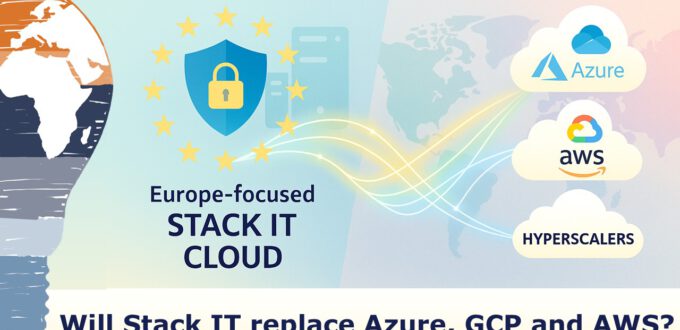
    Will Stack IT replace Azure, GCP and AWS in Europe?


    Will Stack IT replace Azure, GCP and AWS in Europe?


    It is one of those questions that makes the rounds in boardrooms and strategy sessions: could a European cloud provider such as Stack IT ever replace the global giants Azure, AWS, and Google Cloud? On the surface, the timing seems right. Policymakers in Brussels are pushing hard for digital sovereignty 🇪🇺. National governments are raising the bar on compliance. Enterprises, especially those in highly regulated industries, are looking for alternatives that give them peace of mind when it comes to data protection 🔐.

    Against this backdrop, Stack IT enters the picture and positions itself as a trustworthy, sovereign alternative. But does that mean it will dethrone the hyperscalers anytime soon? The short answer is no. The longer answer is that Stack IT is carving out a very specific role—one that complements rather than replaces the global players. Let’s explore why.


    What is Stack IT Cloud?


    Stack IT Cloud is a European cloud provider headquartered in Germany, designed from the ground up to deliver sovereignty, compliance, and trust. Unlike global hyperscalers that operate under U.S. law, Stack IT ensures that all data remains subject to European jurisdiction and GDPR standards ✅. This is a powerful differentiator for organizations in sectors such as government, healthcare, or finance, where regulatory compliance is more than a checkmark—it is mission-critical.

    The portfolio of Stack IT Cloud is intentionally lean. It focuses on core infrastructure services such as compute power through virtual machines, secure block and object storage, and enterprise-grade backup solutions. It also enables container-based application architectures through Kubernetes and API-driven orchestration. On top of that, Stack IT provides networking capabilities, including VPN and private interconnects, that allow seamless integration into hybrid and multi-cloud environments. Selected managed services, such as databases and developer platforms, round off the offering.

    This is not the “everything store” of cloud computing. Instead, it is a curated set of services designed to meet the sovereignty and security requirements of European enterprises while staying compatible with modern IT architectures.


    The Common Ground: Stack IT and the Hyperscalers


    Despite the differences in scale, Stack IT shares essential characteristics with Azure, AWS, and Google Cloud. At the heart of each platform lies the same principle: elastic, scalable, and on-demand infrastructure ☁️. A virtual machine provisioned in Stack IT behaves much like one in AWS or Azure. Developers consume resources when needed and pay for what they use—cloud as utility computing.

    There is also shared alignment in architecture. Kubernetes, containers, APIs, and automation are the standards of cloud-native design. Enterprises building CI/CD pipelines or microservices applications do not need to abandon these models when shifting workloads to Stack IT.

    Security and compliance, too, form common ground. Encryption, access management, monitoring, and certifications are expected from any enterprise-grade cloud provider. While Stack IT emphasizes European data residency, the hyperscalers also invest heavily in compliance frameworks.

    Finally, all providers embrace the idea of ecosystems. Hyperscalers thrive because of their vast partner networks. Stack IT is following the same playbook, building alliances with software vendors, local integrators, and public sector agencies.


    Where the Differences Really Matter


    The crucial differences lie in scale, scope, and innovation 🚀.

    Hyperscalers operate at a global level with hundreds of services covering everything from AI supercomputers to IoT platforms. By contrast, Stack IT deliberately restricts itself to a smaller service catalog. This reflects its strategy: it does not aim to compete feature by feature, but to excel in trust, compliance, and sovereignty.

    The global footprint of hyperscalers is another dividing line. Microsoft Azure spans more than 60 regions, AWS operates data centers on nearly every continent, and Google Cloud integrates seamlessly with worldwide enterprises 🌍. Stack IT, in contrast, is rooted in Europe. Its strength lies in local data residency and legal jurisdiction.

    Innovation speed also highlights the difference. Microsoft, Amazon, and Google pour billions into R&D every quarter, releasing new services on a near-weekly cadence. Stack IT cannot keep up with that pace. Instead, it focuses on stability, reliability, and sovereign compliance.

    Finally, there is customer reach and credibility. Hyperscalers are deeply entrenched in enterprise IT. Stack IT is still building that track record, primarily within the public sector and regulated industries.


    Conclusion: A Complement, Not a Replacement


    So, will Stack IT replace Azure, AWS, and Google Cloud in Europe? The reality is no—not now, and not in the foreseeable future. The hyperscalers are simply too far ahead in terms of service breadth, innovation, and global infrastructure.

    But Stack IT has an essential role to play. It is not a competitor in the traditional sense, but a complement in a broader multi-cloud strategy. Enterprises can continue to leverage Azure, AWS, and GCP for advanced services such as analytics, AI, and global collaboration. At the same time, they can integrate Stack IT for workloads that require absolute sovereignty, strict compliance, or local data residency guarantees.

    For public sector organizations, healthcare providers, financial institutions, and operators of critical infrastructure, Stack IT delivers peace of mind that no global hyperscaler can offer. It enables a dual approach: global innovation through hyperscalers combined with European trust through Stack IT.

    The question is not whether Stack IT will replace the hyperscalers. It won’t. The smarter question is how enterprises can design an architecture where both worlds work together. That is where the future of European cloud lies. 🌐

    Stay clever. Stay responsible. Stay scalable.
    Your Mr. Microsoft,
    Uwe Zabel


    🚀 Curious about Stack IT and how it fits into your multi-cloud strategy?
    Follow my journey on zabu.cloud—where cloud, AI, and business strategy converge.
    Or ping me directly—because building the future works better as a team.
  • DSAG Bremen 2025 & Why SAP auf Hyperscaler‑Clouds Belongs in Every SAP Strategy Bag

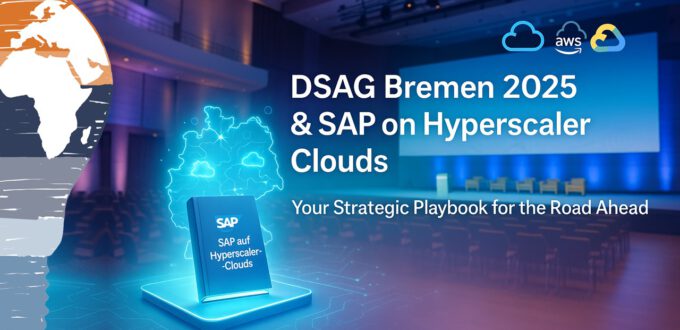
    DSAG Bremen 2025 & Why SAP auf Hyperscaler‑Clouds Belongs in Every SAP Strategy Bag


    ♨️ DSAG Bremen 2025
    & Why SAP auf Hyperscaler‑Clouds Belongs in Every SAP Strategy Bag


    It’s that time of year again! The DSAG Annual Congress is coming to Bremen again from September 16‑18, 2025 and for every SAP user, consultant, partner, or technologist in the German‑speaking world, this event is an anchor point.

    If you ask me, there’s no better occasion than DSAG Bremen to reflect, to learn, and to sharpen your strategy. And in that spirit, I want to talk about how my book SAP auf Hyperscaler‑Clouds fits into what’s happening now and why it might be more relevant than ever.


    What Makes DSAG Bremen So Special in 2025


    • Over 5,500 participants expected: users, decision makers, SAP experts, partners. A melting pot of real use‑cases, challenges, and visions.
    • 175+ exhibiting partners showcasing SAP trends, solutions, and the future path from ECC to S/4HANA, from on‑premise to cloud, from legacy custom code to modern architectures.
    • Keynotes, expert sessions, workshops—for both business & IT. Deep dives into transformations, migrations, hyperscaler partnerships, governance. This is not just “see the product demos”, but “hear war stories and lessons learned.”

    The theme this year emphasizes what many companies are wrestling with: finding balance—between innovation and stability, between speed and risk, between regulatory constraints and cloud opportunity.


    Why SAP auf Hyperscaler‑Clouds Matters Right Now


    You might already know the book, but here are a few reminders and updates that connect with what you’ll see, hear, and discuss at DSAG:

    • The book, co‑authored by Steffi Dünnebier and myself, gives you practical guidance on migrating SAP workloads to hyperscaler clouds: Azure, AWS, Google. It covers architecture, integration, operations, and especially how to keep workflows, reliability, compliance intact. Rheinwerk Verlag
    • In the book, we argued that ECC / ERP 6.0 support (mainstream + extended) was heading toward 2027 / 2030 as hard deadlines. Many enterprise users built their plans accordingly. With recent SAP announcements (e.g. private edition transition options), some of those timelines are getting more flexible—but only if you prepare now. See details here.
    • The book includes best‑practices for hybrid scenarios, governance, cost control, automation for operations, and how to partner with hyperscalers. For those attending DSAG, you’ll hear many of these topics echoed: cloud architecture, shift to managed services, balancing cost, compliance, performance.

    And if you do not have a copy yet, get yours at the Rheinwerk booth on the DSAG

    blank

    What I’ll Be Looking for at DSAG—Bonus Value for Readers


    At DSAG in Bremen, I’ll be listening for:

    • How many users are going with SAP ERP Private Edition Transition Options to get more time, instead of rushing into full S/4 migrations.
    • Stories from the field: what worked, what failed in early hyperscaler migrations—especially in regulated industries, manufacturing, public sector.
    • How hyperscalers are partnering (or being asked to partner) more deeply, not just for infrastructure, but for managed services, automation, operations and security.
    • What kinds of governance frameworks and migration paths are being adopted—because even when you move to cloud, complexity (custom code, integration, data) doesn’t go away.

    These are exactly the kinds of insights that are in SAP auf Hyperscaler‑Clouds, but live, current, discussed in panels and over coffee.


    What This Means for Enterprise Clients


    If you live in the world of SAP enterprise, DSAG/Bremen + my book give some powerful signals:

    1. You can adjust your roadmap – The shock of “you must migrate by 2030 or else” is softening a bit, giving more breathing room. But breathing room doesn’t equal infinite delay—you still need momentum.
    2. Cost of delay vs cost of being first mover – Delaying carries costs: security, innovation, opportunity. Being early helps benefit from hyperscaler efficiencies, modern best practices, cloud native services.
    3. Choosing partners wisely – Hyperscaler infrastructure is one piece—who supports you in monitoring, in upgrade cycles, in custom code refactoring, in DevOps and operations matters.
    4. Governance, compliance and business continuity are not optional. When you shift SAP core systems to cloud or private edition, you must ensure SLA, auditability, performance, and disaster recovery are rock solid.

    What Hyperscalers (Microsoft, AWS, Google) Should Be Doing


    From the supply side, here are some thoughts:

    • Make pre‑built migration tooling and best practices widely available. Show reference customers. Make proof‑points.
    • Provide flexible licensing / cost models that account for phased migration, mixed landscape (on‑prem + private cloud + public cloud), and long‑tail support, especially for edge cases and verticals.
    • Invest in managed services around SAP operations (patching, monitoring, performance), security, compliance, and training. Many companies will evaluate clouds not just on infrastructure but on the operational burden.
    • Highlight reliability, compliance, data locality, sovereignty—because many SAP users care deeply about those, especially in DACH region.

    Looking Forward: DSAG + SAP auf Hyperscaler‑Clouds = Better Strategy


    If you’re heading to DSAG in Bremen:

    • Bring your book. Use it as inspiration what you ask in vendor‑booths and panels.
    • Attend sessions on SAP migrations and cloud strategy—compare what the book describes with what companies are doing.
    • Use DSAG to build your network with peers who are doing actual migrations; lessons there will often be more practical than anything you read.
    • Use the extra input you gather to refine your internal roadmap—update your stakeholders with real cost/benefit, risk assessments, and phased plans.

    Because SAP auf Hyperscaler‑Clouds isn’t just theory—it is a playbook for what many SAP shops will be facing over the next few years. And DSAG Bremen gives you the chance to confirm, challenge and sharpen that playbook live.

    Whether you’re in Hall 6 at a partner booth, in a session room, or over coffee in Bremen—I can’t wait to see how the future of SAP + hyperscaler clouds takes shape.

    Stay clever. Stay responsible. Stay scalable.
    Your Mr. Microsoft,
    Uwe Zabel


    🚀 Curious how SAP deadlines, cloud migration and the hyperscaler ecosystem are evolving in real time? Follow my journey on zabu.cloud—where cloud, AI, and business strategy converge.
    Or ping me directly—because building the future works better as a team.

  • SAP ECC to S/4HANA Deadline Extended to 2033

    SAP ECC to S/4HANA Deadline Extended to 2033


    SAP ECC to S/4HANA Deadline Extended to 2033
    What You Need to Know


    SAP dropped a significant signal for customers, especially those running complex, customized landscapes: you now have more breathing room. The deadline for transforming from SAP ECC / ERP 6.0 to S/4HANA (via SAP’s cloud ERP offerings) has a new transition option that lets eligible customers extend their usage of ECC until end of 2033 under certain conditions.

    If you thought 2030 was the firm cutoff, this new SAP ERP Private Edition Transition Option changes that—especially for large enterprises with heavy customizations, complex integrations, or regulatory constraints. Let’s dig into what this means, how it works, and what you (or your CIO) should be thinking about.


    What Is the “Transition Option” and How Does It Work


    AP’s offering is called “SAP ERP, Private Edition, Transition Option.” Key features:

    • It’s not an “extended maintenance” for on‑premise ECC after 2030 in the classic sense. It’s a cloud‑subscription scenario. You move ERP to a private edition cloud under SAP’s umbrella.
    • Eligibility: You must move relevant systems to SAP ERP Private Edition before the end of 2030. Also, you must be on SAP HANA as database. Third‑party tech (e.g. older Java versions) and unsupported components will need modernization. SAP News Center
    • The transition option will be purchasable from 2028 and usage under the option runs from 2031 through 2033. SAP News Center
    • The scope is centered around ECC and excludes many elements of SAP Business Suite 7 not covered by the subscription beyond 2030. So if you rely on legacy add-ons, modules, or custom components, you’ll need to verify if they are included or need alternative migration paths. SAP News Center

    This option gives time—but with trade‑offs: higher subscription fees in the 2031‑33 window compared to earlier migration or standard cloud ERP subscription. SAP News Center


    Why SAP Is Doing This: The Pressure to Move vs Real‑World Constraints


    SAP has long pushed customers toward S/4HANA through programs like RISE with SAP and through setting support end dates:

    • ECC’s mainstream maintenance ends in 2027. Extended maintenance support currently continues until 2030 for many customers.
    • Many large enterprises haven’t yet completed their migration. The reasons: complexity, custom code, integrations, regulatory issues, cost of migration, lack of skilled resources, or third‑party dependencies.

    With the transition option, SAP acknowledges the reality: not everyone will hit 2030 cleanly, especially large or regulated industries. This offering is a kind of “bridge” for those who need more planning time—but still want alignment with SAP’s cloud strategy. SAP News Center


    What Happens to On‑Premises ECC After 2030 If You Don’t Take the Option


    Important distinction: On‑premise customers who do not adopt the transition option will still face the deadlines:

    • Maintenance for many SAP Business Suite 7 / ECC components still follows the schedule: mainstream until 2027, extended support until 2030. After that, SAP’s ability to issue updates, compatibility packs, legal/security patches for older on‑prem components will decline.
    • The transition option does not extend the on‑prem support commitment beyond what SAP has already committed. This is not a change in that respect. SAP News Center

    So if your strategy is “stay on‑prem, no cloud,” you need to plan either migration to S/4HANA, or identify third‑party support or custom mitigation strategies for business continuity post‑2030.


    What This Means for Enterprise Strategy


    If you are a CIO, ERP lead, or transformation executive, this new option changes the calculus. Here are the strategic implications:

    • More time to plan & test: Extended timeline alleviates rush risk. You can do partial migrations, proofs of concept, code refactoring, data cleansing, and aligning with compliance without forced deadlines.
    • Budgeting becomes multi‑phased: Instead of a big bang around 2029‑2030, you can spread investment across 2028‑2033. Better for CAPEX / OPEX alignment, especially when cloud subscription models are involved.
    • Risk mitigation: This buffer reduces the risk of downtime, system failure, or skipped compliance because you had to move too fast. Also gives time to ensure business continuity.
    • Opportunity costs: But beware—there’s cost in delaying too long. Missed innovations, less access to newer features, increased technical debt, possibly higher cost of cloud infrastructure or maintenance in private edition during extended years.

    What Hyperscalers Need to Watch And Do


    For cloud providers and hyperscalers, this extension has big ripple effects:

    Innovation lag vs feature parity: Systems in transition option may lag behind S/4HANA in terms of features or enhancements. Hyperscalers and SAP together must ensure customers in transition aren’t left far behind in security, compliance, and innovation.

    Infrastructure demand: Many customers will delay full S/4HANA cloud migrations. They’ll want “private edition” cloud infrastructure, hosting, managed services, migrations. Hyperscalers who can support SAP Private Edition deployments will be in demand. Microsoft Azure, AWS, Google Cloud must ensure robust SAP‑certified private cloud options, compliance, high availability, security, and migration tooling.

    Partnership & service opportunities: Consulting, migration service providers, system integrators will be busy helping customers prepare now—HANA migrations, identifying custom code, updating third‑party dependencies. Hyperscalers who partner well here or build managed offerings will win.

    Pricing & licensing pressure: Because the transition option is more expensive in 2031‑33, customers will negotiate heavily. Hyperscalers must be competitive, deliver strong value in cloud operations, and help with cost efficiencies (e.g. shared services, automation, support).


    How This Relates to our Book: SAP on Hyperscaler Cloud


    In SAP on Hyperscaler Cloud, we discussed how ECC / ERP 6.0’s support terms were ending around 2027 for mainstream, with extended support until 2030. That was the known “hard” boundary and formed baseline expectations for many enterprise roadmaps. This new transition option essentially extends a bridge from that baseline, but only for those who commit to moving into SAP’s private‑edition cloud path. So many of the assumptions in the book still hold, but now with modified timelines and added complexity.

    Enterprises that used the 2027/2030 deadlines in your planning should revisit their roadmaps. The extra time to 2033 may offer comfort, but only if you use the period wisely: preparing, modernizing, and shifting architecture rather than just delaying.


    What Enterprises Should Do Next


    Revisit your transformation roadmap now. Adjust timelines, resources, and budgets, taking into account the 2033 option—but don’t treat it as an excuse to stall.

    Align to prerequisites early. Migrate to HANA, retire unsupported technologies, simplify custom code, ensure you meet the criteria for the transition option.

    Evaluate cost vs value. Do a Total Cost of Ownership (TCO) comparison for options: full migration to S/4HANA now, using transition option, or staying on extended support.

    Engage with hyperscaler partners. Whether Azure, AWS, Google—find those who offer managed private‑cloud SAP solutions, strong SLAs, migration tooling, and support.

    Consider regulatory, compliance, and security risks. As you delay migration, ensure that patched security, compliance with audits, data protection, and vulnerability management remain non‑negotiable.


      Conclusion


      SAP’s announcement of the ERP Private Edition Transition Option to stretch certain ECC usage through 2033 is a game‑changer for organizations with complex SAP landscapes. It gives breathing space, planning room, and a more measured way to transition to S/4HANA. But that breathing space comes with obligations: you’ll need to meet certain technical prerequisites, manage costs, and stay aligned with cloud strategy.

      For enterprise clients, this may mean adjusting strategy (no more “we’ll do it later”), engaging hyperscaler partners earlier, investing in cloud infrastructure, and ensuring compliance and modernization now.

      Hyperscalers should see this as both challenge and opportunity: challenge in meeting raised expectations, and opportunity in providing differentiated migration and private‑cloud services.

      And as I wrote in SAP on Hyperscaler Cloud, the 2030 deadline was once seen as final. Now we have up to 2033—but only if we plan expertly, invest smartly, and move deliberately rather than desperately.

      Stay clever. Stay responsible. Stay scalable.
      Your Mr. Microsoft,
      Uwe Zabel


      Curious how SAP deadlines, hyperscalers, and your enterprise‑cloud strategy align in 2025? Follow my journey here on zabu.cloud where cloud, AI, and business strategy converge.
      Or ping me directly, because building the future works better as a team.

    1. United for Impact: Building the next chapter of Microsoft + Capgemini in Germany

      United for Impact: Building the next chapter of Microsoft + Capgemini in Germany


      United for Impact: Building the next chapter of Microsoft + Capgemini in Germany

      Planning the Future, Together – One Industry and One Solution Area at a Time


      Yesterday, I had the privilege of joining an inspiring session at Microsoft Germany’s Office in Frankfurt. A session that reminded me exactly why I love doing what I do.

      This wasn’t just another meeting. This was Partner Business Planning. A strategic touchpoint where Microsoft and Capgemini came together to shape the joint vision for the next 12 months. Think of it as the control room of a spaceship: vision, navigation, mission planning… all in one place. 🚀

      And here’s the twist: it wasn’t just tech leads and alliance managers. We had colleagues from Capgemini Invent, Cloud Infrastructure, Insights and Data, Financial Services, and of course, our strategic alliance management all in one room, aligned around a single mission: to empower German enterprises with next-generation digital transformation.


      The Power of strategic alignment


      We’re not just talking roadmaps and budgets here. We’re talking solution areas and industry focus that truly reflect what the German market needs—right now and in the near future.

      Together with Microsoft, we dove deep into:

      • Core solution areas that matter most to our joint clients:
        Think Cloud Infrastructure, Data & AI, Security, Business Applications, and Modern Work.
      • Industries in transformation:
        We looked closely at Manufacturing, Public Sector, Financial Services, and Retail—with tailored approaches to support each sector’s unique challenges.

      But what truly made this session special?
      It wasn’t the slides or the metrics—it was the energy in the room. The commitment to co-innovate. And the shared purpose of solving real-world customer problems with the full force of Microsoft’s technology and Capgemini’s industry expertise.


      Why Germany needs strong Cloud Partnerships


      Let’s be honest. Germany is at a crossroads. AI is no longer hype; it’s implementation time. Cloud isn’t a nice-to-have; it’s mission-critical. Sustainability is not a buzzword; it’s boardroom strategy.

      This is exactly why close alliances like Microsoft + Capgemini matter more than ever.

      We bring scale, expertise, and local accountability. Microsoft brings world-leading platforms and unmatched innovation velocity. When we align our people, our portfolios, and our priorities—we unlock value no single organization could create alone.

      This is not just about delivering cloud migrations or AI pilots. It’s about co-creating industry-specific, scalable solutions that move the needle for our clients. With security built in, compliant, and sovereign-ready.


      A Thank you to the People who make it possible


      A heartfelt thank-you goes to Holly Shibly, who has been a consistent and passionate driver of the Capgemini-Microsoft partnership over the years. Holly, your insight, energy, and deep understanding of both organizations continues to inspire us and guide this alliance.

      Also, a big shoutout to all the Capgemini participants across our units who contributed to the discussion with sharp ideas, real-world client experience, and strategic thinking. These are the kinds of cross-functional collaborations that turn vision into reality.


      What’s next? Time to deliver.


      Now comes the exciting part: executing the plan. Driving new co-sell motions. Turning concepts into POCs. Scaling client success stories. All while staying grounded in what our clients really need: outcomes, simplicity, and trust.

      As we move forward, I’m more convinced than ever that this kind of deep, integrated, long-term partnership is what will define the winners in Germany’s next phase of digital innovation.

      We’re not here to follow trends. We’re here to shape them, with Microsoft, with our clients, and with a relentless focus on business impact.

      Stay clever. Stay responsible. Stay scalable.
      Your Mr. Microsoft,
      Uwe Zabel


      🚀 Curious how this plays out in your industry? Let’s talk cloud strategy, sovereign readiness, or AI implementation. Follow my journey on zabu.cloud, where cloud, compliance, and business strategy converge. Or ping me directly because building the future works better as a team.

    2. Microsoft Sovereign Cloud Solutions July 2025 Update

      Microsoft Sovereign Cloud Solutions July 2025 Update


      Microsoft Sovereign Cloud Solutions July 2025 Update: Your Cloud, Your Rules


      Back in April, I shared my perspective on Microsoft’s Sovereign Cloud strategy and the four “flavors” of control available to European organizations. Since then, things have moved fast.

      On June 16, 2025, Microsoft announced the next evolution: a suite of comprehensive sovereign solutions designed to give European enterprises more control, more choice, and more flexibility across both public and private infrastructure.

      As “Mr. Microsoft,” I see this as more than a technical update. It’s a game-changer.

      Let’s dive in.


      Recap: The Four Flavors of Cloud Control


      In case you missed my April post, here’s a quick refresher on Microsoft’s sovereignty model:

      • Microsoft Public Cloud – The global, highly scalable Azure platform.
      • Microsoft Cloud for Sovereignty – Full control over encryption keys, managed and operated under European law.
      • National Partner Clouds – Bleu in France and Delos Cloud in Germany—locally operated and partner-run sovereign environments.
      • Azure Local – Azure services deployed directly on your own hardware, within your own datacenter.

      These four flavors have become the foundation of Europe’s sovereign cloud story.


      Spotlight: Microsoft 365 Local


      Here’s where things get really interesting.

      With Microsoft 365 Local, Microsoft brings its productivity powerhouses—Exchange, SharePoint, Teams, and more—into your hands like never before.

      Forget simply choosing a regional datacenter. With Microsoft 365 Local, you can now deploy your productivity workloads entirely within your own datacenter, a partner-operated sovereign cloud and even in an air-gapped, disconnected environment

      And yes, it’s real.

      What does this mean?

      • Full deployment control: You decide where your workloads live and how they run.
      • Simplified management: Azure Local tooling and Microsoft 365 now work together in a unified framework.
      • Enterprise-grade resilience: Ideal for critical sectors like government, healthcare, and defense

      In short:
      Microsoft 365 Local empowers your organization to maintain full sovereignty without losing modern productivity tools.

      It’s Microsoft 365 on your terms.


      What Else Is New? Building a Complete Sovereign Portfolio


      Beyond Microsoft 365 Local, Microsoft’s June update introduced three new pillars of control and security across the entire Sovereign Cloud ecosystem:

      🛡️ Data Guardian

      • Extends Microsoft’s EU Data Boundary.
      • Ensures only European personnel can approve or monitor remote access to your workloads.
      • Access requests? Logged in a tamper-evident ledger for full auditability.

      🔑 External Key Management

      • Bring Your Own Key (BYOK)—now at hyperscale.
      • Manage encryption keys from your own HSM (on-premises or third-party).
      • Seamlessly integrated with Azure Managed HSM, supporting vendors like Thales, Utimaco, and Futurex.

      📊 Regulated Environment Management

      • One console. Total control.
      • Monitor, configure, and govern all your sovereign features—Data Guardian policies, access logs, and compliance controls—from a single pane of glass.

      Meanwhile, Microsoft’s National Partner Clouds remain key pillars:

      • Bleu (France): Built with Orange and Capgemini, meeting SecNumCloud standards.
      • Delos Cloud (Germany): Operated by SAP, aligned with German government platform requirements.

      To complete the ecosystem, Microsoft is introducing a Sovereign Cloud Specialization for partners, ensuring certified local experts can design, deploy, and operate these complex sovereign architectures.

      Read the full anouncement from Microsoft here.


      Choosing Your Sovereign Path


      Let’s talk strategy.

      Microsoft’s sovereign cloud model now offers the broadest choice in the industry, spanning:

      • Sovereign Public Cloud – Azure, Microsoft 365, Security, and Power Platform services, operated under European law.
      • Sovereign Private Cloud – Microsoft 365 Local and Azure Local, running in your datacenter or air-gapped environments.
      • National Partner Clouds – Partner-operated sovereign environments for France and Germany.

      Whether your focus is:

      • Full control over encryption,
      • Restricting data access to European personnel only,
      • Operating workloads in fully isolated, air-gapped infrastructures,

      you now have the flexibility to build sovereignty your way.


      Why Sovereignty Isn’t Just About Compliance


      Let’s be clear:
      Sovereignty is no longer a checkbox exercise.

      It’s about:

      • Strategic alignment to national regulations and security standards,
      • Mitigating geopolitical risks,
      • Controlling operational dependencies,
      • And creating resilience that supports your long-term mission.

      For governments, critical infrastructure providers, healthcare organizations, and financial services, the stakes couldn’t be higher.

      Microsoft’s expanded Sovereign Cloud solutions finally allow you to pursue digital transformation without surrendering control.


      Final Thoughts from Mr. Microsoft


      For years, data sovereignty was seen as a blocker. Something that slowed innovation.

      Not anymore.

      With Microsoft 365 Local and the expanded sovereign portfolio, Microsoft has rewritten the rules. You no longer need to choose between modern cloud functionality and operational sovereignty.

      It’s now possible to have both.

      As “Mr. Microsoft”, I see this as a defining moment that is not just for compliance teams but for IT leaders, architects, and business strategists across Europe.

      The cloud just became your cloud.

      Stay clever. Stay Sovereign.
      Your Mr. Microsoft,
      Uwe Zabel


      🚀 Curious about Microsoft 365 Local or Sovereign Cloud solutions? Follow my journey on zabu.cloud, where cloud, compliance, and business strategy converge. Or ping me directly because building the future works better as a team.

    3. 1,000 AI Agents per Developer?

      1,000 AI Agents per Developer?


      🤖 1,000 AI Agents per Developer?

      Why SoftBank’s Vision Could Reshape the Cloud


      On July 16, 2025, SoftBank founder Masayoshi Son made a bold announcement that could send ripples across every enterprise IT strategy:


      SoftBank plans to deploy one billion AI agents by the end of this year—and trillions in the near future. His vision? Roughly 1,000 AI agents replacing a single human developer, running 24/7 at a monthly cost of about €0.23 per agent.

      Yes, you read that right.

      As “Mr. Microsoft”, this announcement hit me like a neural network thunderbolt. It’s not just ambitious. It is a sign of where enterprise software is heading: towards autonomous, agent-powered ecosystems at hyperscale.

      Let’s break down what’s happening—and what it means for Microsoft Azure professionals like us.


      🧠 What Did SoftBank Actually Announce?


      At the core of Son’s strategy:

      • The end of human-only coding: AI agents will increasingly handle software development tasks autonomously.
      • Scale and autonomy: Around 1,000 AI agents will replace one human developer, orchestrated into dynamic task forces.
      • Cost efficiency: 1,000 AI agents would cost just €230 per month—and they don’t sleep, take breaks, or call in sick.
      • Infrastructure challenges: SoftBank knows it needs to build specialized agent operating systems, agent management platforms, and massive cloud-scale infrastructure to make this vision reality.

      🚀 Why Azure Is Critical Now


      In Microsoft’s ecosystem, SoftBank’s vision raises a critical question:

      Are we ready to scale AI agent frameworks to billions of instances—securely, responsibly, and efficiently?

      Spoiler: Not yet. But the building blocks exist. And they live in Azure.

      Here’s what this means for Microsoft professionals and enterprise cloud architects:

      1️⃣ Azure AI Agents & Copilot Integration: From Pilot to Hyperscale

      Back in 2024, Microsoft made waves with the introduction of Azure AI Agents and enhanced Copilot capabilities for developers. Together, these tools created a solid foundation for task-driven, conversational automation. Integrated natively into DevOps pipelines and application development workflows.

      But here’s the thing: they’re still designed for small-scale, human-assisted scenarios.

      SoftBank’s announcement highlights a critical gap we now face:

      We need to move from pilot to hyperscale.

      Right now, Copilot acts like a productivity sidekick. A single AI assistant supporting a human developer. That’s useful. But what SoftBank envisions, and what enterprises will soon demand, is something radically different.

      Imagine this:
      Not one Copilot helping you code, but fleets of thousands of Azure AI Agents, collaborating, iterating, and autonomously generating, testing, and deploying code inside controlled Azure environments. A dynamic, self-organizing agent workforce, spinning up as needed, optimizing in real time, and managed as cloud-native resources.

      From Copilot to Code Factory.
      That’s the leap we need to make.
      And Azure is in my view the only cloud platform mature enough to power it.

      2️⃣ Governance and Security is far More Critical Than Ever

      Let’s be honest: deploying 1,000 AI agents per developer sounds like a sci-fi productivity dream… until you think about the real-world risks.

      • Where’s your data going?
      • Who controls these agents?
      • What happens when an agent makes a bad decision?

      When you scale from 1 to 1,000 or even 1 billion AI agents, the risks scale too:

      • Data privacy violations
      • Unchecked access proliferation
      • Algorithmic bias at industrial scale
      • Compliance nightmares with GDPR, AI Act, and global data regulations
      • And perhaps worst of all: agents operating beyond human visibility

      That’s why Microsoft’s Responsible AI Framework becomes non-negotiable.

      To control all of these risks, we need to:

      • Define enterprise-grade governance specifically tailored for AI agent ecosystems
      • Bake in Responsible AI principles from day zero and not as an afterthought
      • Build secure, transparent, explainable architectures so we know what each agent is doing, why, and with whose data

      Because here’s the uncomfortable truth:

      Autonomy without accountability is a disaster waiting to happen.

      Just like Kubernetes revolutionized container orchestration, we need a compliance and governance control plane for AI agents powered by Azure Policy, RBAC, and Azure OpenAI safeguards. And it’s our responsibility to help clients build it.

      3️⃣ Hyperscale MLOps Orchestration on Azure

      Managing one AI agent is easy. Managing ten? Still fine.
      Managing 10,000? Welcome to chaos unless your orchestration is bulletproof.

      Scaling agent ecosystems to enterprise-grade operations demands:

      • Fully automated CI/CD pipelines to build, deploy, and update models across fleets of agents
      • Real-time monitoring and observability, tracking every agent’s performance, health, and decisions
      • Self-healing infrastructures, where failed agents are automatically replaced or rebooted
      • Automated rollback and drift detection, ensuring agents stick to approved configurations and behaviors
      • Continuous policy enforcement to apply governance, security, and compliance standards across the agent fleet

      Luckily, Microsoft Azure provides the toolbox for this scaling:

      • Azure Pipelines for streamlined DevOps
      • Azure Machine Learning for lifecycle management
      • Azure Monitor for real-time telemetry
      • Azure Arc to extend control across hybrid and multi-cloud infrastructures
      • Microsoft Defender for Cloud to secure workloads

      But here’s the challenge:

      Our orchestration models need to evolve.

      What works for human-scale DevOps doesn’t cut it when managing agent fleets at SoftBank’s envisioned scale. We need:

      • New MLOps patterns
      • Automated agent lifecycle management
      • Multi-layered monitoring frameworks
      • AI-powered observability for AI-powered agents (yes, really)

      This isn’t just next-gen DevOps.
      It’s AIOps for AI Agents. And Azure is where you should build it.


      🏢 What This Means for you


      SoftBank’s announcement isn’t just a cool headline. It’s a strategic warning signal: Automation at massive scale is no longer theoretical. It’s coming.

      Here’s how I see Microsoft partners responding:

      • Become the Trusted Transformation Partner: We need to help clients architect, deploy, and govern these agent ecosystems responsibly. From strategy to operations.
      • Upskill the Workforce: As AI agents handle basic coding tasks, our value will come from designing, supervising, and optimizing these ecosystems. Time to expand your L&D to focusing on:
        • Agent architecture
        • Responsible AI
        • Azure MLOps
        • Cloud-native engineering
      • Offer Agent-as-a-Service:
        From consulting to managed services, you can deliver Agent-as-a-Service on Azure. Think about:
        • Azure AI Agent architecture blueprints
        • Managed agent fleet operations
        • Real-time monitoring, tuning, and governance
      • Prioritize Ethics, Compliance, and Risk Management:
        AI autonomy raises tough questions:
        • Who’s liable when an agent makes a mistake?
        • How do we prevent bias at scale?
        • How do we monitor agent decisions?

      This isn’t optional. This is foundational. Consultants like Capgemini jointly with Microsoft together can lead here.


      🛠️ My Recommendations


      To capitalize on this shift, here’s what I propose:

      Immediate Tech & Market Assessment:

      • Evaluate Azure AI Agent and Copilot capabilities today
      • Identify top-priority enterprise use cases for agent-driven automation

      Internal Azure Agent Pilot:

      • Deploy an internal 1,000-agent PoC in Azure
      • Test cost, scalability, and monitoring
      • Document learnings and best practices

      Deepen Microsoft Partnership:

      • Co-develop enhanced agent orchestration SDKs
      • Explore private, multi-tenant Azure hubs for large-scale deployments

      Launch an AI Agent Masterclass:

      • Train your experts on:
        • Azure AI
        • Responsible AI
        • Agent architecture
        • Compliance and ethics
      • Promote certifications validating agent orchestration expertise

      Establish an Agent Governance Framework:

      • Create your own Responsible AI Agent Framework
      • Include regular audits, bias mitigation, and drift detection simulations

      💡 Final Thoughts from Mr. Microsoft


      SoftBank’s vision of 1,000 AI agents per developer isn’t science fiction anymore. It’s a strategic direction.

      As “Mr. Microsoft” at Capgemini, I see this not as a threat, but as an opportunity. An inflection point where:

      • Azure becomes the platform of choice for hyperscale agent ecosystems
      • Capgemini evolves from consultant to trusted operator of AI-driven architectures
      • Human expertise shifts from doing to supervising, orchestrating, and optimizing autonomous systems

      The future of software development?
      It’s not “human vs. AI.” It’s human + AI agents at scale, working together. Trusted and under human oversight.

      Now’s the time to lead.

      Stay clever. Stay responsible. Stay scalable.
      Your Mr. Microsoft,
      Uwe Zabel


      🚀 Curious about AI agents on Azure? Follow my journey on zabu.cloud—where cloud, AI, and business strategy converge.
      Or ping me directly, because building the future works better as a team.

    4. Another Year as Certified Azure Solutions Architect Expert

      Another Year as Certified Azure Solutions Architect Expert


      🎓 Another Year as Certified Azure Solutions Architect Expert – Why Staying Current Matters


      Another year, another badge. Today on June 12, 2025, I successfully renewed my Microsoft Certified: Azure Solutions Architect Expert certification for yet another year. 🏆

      I first earned this certification back on September 29, 2020. Since then, I’ve extended it annually, embracing Microsoft’s continuous learning approach to keep certifications up-to-date. Because let’s be honest: in the cloud world, standing still means falling behind.


      🚀 What Does This Certification Actually Mean?


      The Azure Solutions Architect Expert badge isn’t just another digital sticker on LinkedIn (though, let’s admit, it does look good up there 😎).

      It’s Microsoft’s official recognition that you:

      • Understand cloud architecture deeply (beyond just knowing what a VM is)
      • Design end-to-end Azure solutions across compute, networking, storage, and security
      • Balance business goals with technical constraints
      • Know when to say “lift and shift” and when to say “re-architect everything”
      • Can translate buzzwords into working, scalable, secure architectures

      In short: It proves you can architect Azure solutions that actually work in the real world.


      🔄 Continuous Learning: Why Annual Renewal Matters


      When I first passed the exam in 2020, Azure looked different. Since then:

      • Services have changed
      • Best practices evolved
      • Security threats adapted
      • New architectures emerged

      Microsoft’s move to annual renewals via free online assessments reflects this pace. Instead of retaking high-stakes exams every few years, you’re now encouraged (or rather, required) to stay current year after year.

      And honestly? I’m all for it.

      • It keeps me sharp.
      • It keeps me humble.
      • And it ensures my clients get advice rooted in the latest Azure capabilities—not 2020 best practices.

      📊 Why Certifications Still Matter


      Sure, certifications aren’t everything. Real-world experience counts more. But certifications:

      • Force you to revisit fundamentals
      • Validate your expertise in a structured way
      • Align your knowledge with Microsoft’s evolving ecosystem
      • Build credibility with clients and employers
      • And (let’s be honest) feel good to achieve

      For me, certifications aren’t about the paper. They’re about the mindset:

      Continuous learning. Continuous improvement. Continuous relevance.


      🛠️ What’s Next on My Certification Journey?


      • Continue renewing my Azure Solutions Architect Expert annually
      • Deepen my focus on AI & Data
      • Stay certified, stay current, stay ahead

      Because as much as I love architecture diagrams, I love relevant architecture diagrams even more.


      💬 Final Thoughts from Mr. Microsoft


      Renewing my Azure Solutions Architect Expert certification each year isn’t just a checkbox task. It’s a reminder that in the cloud, learning never stops.

      Every client conversation, every architecture review, every solution I design needs to reflect today’s best practices—not last year’s playbook.

      So, here’s my advice:

      • If you’re certified, keep it current.
      • If you’re not yet certified, start your journey.
      • And if you’re unsure where to start, ping me. Let’s map your cloud career together.

      Stay clever. Stay certified. Stay architected.
      Your Mr. Microsoft,
      Uwe Zabel


      🔗 Want to know more about Azure certifications? Explore my certification tips and Microsoft Cloud insights right here at zabu.cloud. Let’s build the future, one architecture at a time. 🚀

    5. Cloud Lock-In Is Not the Enemy

      Cloud Lock-In Is Not the Enemy


      💥 Cloud Lock-In Is Not the Enemy

      It Might Be Your Superpower


      I just returned from a family vacation in Denmark — no laptop, no phone, no Teams, just pure nature: wind, sand, sea, plants. It was a conscious digital detox. Slowing down like that gives me space to reflect and let new ideas emerge.

      One thing kept showing up in my viewfinder multiple times: a lighthouse.

      We often talk about “lighthouse projects” in IT industry. Projects that shine brightly and inspire others. But let’s be honest, not all lighthouse signals lead to safe harbors. Some can set misleading trends.


      About Vendor Lock-In


      💡 One such trend we’ve debated for years: Avoiding cloud vendor Lock-In at all costs.

      We’ve all heard it:

      • “But what if we want to switch providers later?”
      • “We must avoid Lock-In at all costs!”
      • “Let’s keep everything containerized and portable, just in case…”

      🔍 Let’s zoom out for a second.

      The Lock-In effect isn’t new, nor is it exclusive to cloud. We’ve had it for years:

      • SAP? Lock-In.
      • Oracle? Very Lock-In.
      • VMware? Oh yes.
      • Even your iPhone and that “can’t-live-without-it” app ecosystem? You guessed it — Lock-In.

      Hyperscalers are not the bad ones


      So why is it only when we talk about cloud hyperscalers that it becomes the big bad wolf?

      🤯 Here’s what I think:

      If you get the best possible outcome by going deep into a platform’s native capabilities, it is not a bad thing.

      👉 Especially in custom software development, embracing cloud-native services. And I mean yes, really embracing them, not just wrapping your VMs in a container and calling it cloud:

      • Faster time-to-market 🚀
      • Lower operational and infrastructure costs 💸
      • Richer event-driven capabilities ⚡
      • Tighter integration into the digital ecosystem 🔗
      • Modern architectures that scale and evolve 🌐

      ✅ For our clients, this translates directly to business value:

      • A better ROI through smarter resource usage
      • Shorter go-to-market cycles, enabling first-mover advantage
      • More room for innovation in the product and customer experience

      💡 Portability sounds great in theory. But in practice, it often leads to abstraction layers that cost performance, budget, and developer happiness.

      🌈 Here’s my challenge to you:

      Let’s stop treating “avoiding Lock-In” as a virtue by default. Let’s instead guide our clients to make intentional, value-driven decisions. If Azure (or AWS, or GCP) offers a service that solves their problem better and faster than a generic alternative — why not go for it?

      Don’t build for the unlikely exit strategy. — Build for impact. Build for value. Build smart.

      Let’s help our clients unlock the real power of the cloud by embracing modern, intelligent software, made for cloud, not despite them.

      🔥 Be bold. Be native. Be modern.

      #MicrosoftCloud #CloudNative #NoFearOfLockIn #ModernApps #IntelligentSoftware #AzureLove #BetterROI #FasterGTM #InnovationAccelerator

      Your Mr. Microsoft

      Read more about Cloud here in my Blog

    6. Microsoft Cloud for Sovereignty

      Microsoft Cloud for Sovereignty


      Microsoft Cloud for Sovereignty

      How much control do you need?


      Let me start with a small confession:

      I’m not particularly well-organized. At least that’s how it feels to me most of the time. This becomes especially apparent right before I’m heading off for vacation — like right now, as I’m preparing to leave this afternoon for a well-deserved Easter family vacation. 🐣

      Two weeks of no work emails, no Teams calls, and (hopefully!) no sudden escalations. That’s the goal anyway. But as anyone who’s been in my shoes knows, taking time off isn’t just about setting an out-of-office message and walking away. There’s a whole process that needs to happen behind the scenes. For me, the last days before a break are usually packed — making sure everything is updated, tasks are clear, responsibilities are properly delegated, and nothing critical gets stuck during my absence.

      And yes, that means these last couple of days at work get noticeably longer — and the coffee consumption inevitably higher. ☕😅

      Honestly, I’m still searching for the perfect formula here. What’s your experience? Do you have a secret best practice to optimize things before you leave for a vacation? I’d love to hear how you handle it — share your insights in the comments below!


      Speaking of control — let’s talk about Data Sovereignty again!


      On February 3rd, I shared a post here titled EU Data Boundary — Microsoft’s Next Big Step for European Data Sovereignty here.

      Back in February, I talked about the concept of the EU Data Boundary for Microsoft Azure and Microsoft 365, focusing mainly on the challenges and opportunities organizations face with data residency and sovereignty within the EU. But when we discuss controlling data, especially sensitive or mission-critical data, there’s actually even more on the menu from Microsoft than you might realize.

      So today, let’s take a deeper dive into Microsoft’s broader Digital Sovereignty Portfolio and unpack your options:


      Microsoft’s Four Flavors of Cloud Control


      Microsoft offers different flavors of cloud solutions, each tailored for specific business needs regarding control and sovereignty over your data:

      1️⃣ Microsoft Public Cloud (Azure)

      This is the go-to, standard version most businesses rely on. It provides global scalability, comprehensive features, robust security, and compliance certifications right out of the box. For most workloads, it’s the ideal balance between flexibility, cost-efficiency, and convenience.

      If your workloads aren’t subject to very restrictive data sovereignty or compliance rules, this is usually your best choice.

      2️⃣ Microsoft Cloud for Sovereignty

      This version steps up the game, especially designed for organizations needing more stringent data protection and compliance. Microsoft Cloud for Sovereignty allows you to manage your own encryption keys fully, meaning you retain absolute control over your data security. This solution is tailored specifically for governments, regulated industries, and clients that operate under strict security and sovereignty standards.

      If you absolutely must hold the keys (literally!) and need an enhanced layer of control, this version fits perfectly.

      3️⃣Sovereign Clouds with Microsoft Technology (Bleu, Delos)

      Starting in 2026, Europe will see the launch of two major sovereign cloud initiatives powered by Microsoft technology:

      • Bleu in France 🇫🇷
      • Delos in Germany 🇩🇪

      These clouds will be operated locally by trusted partners, ensuring full compliance with national regulations and the highest possible standards of digital sovereignty and data privacy. This setup ensures data stays completely within the country and under local jurisdiction, while still benefiting from proven Microsoft technology.

      Important: Both Bleu and Delos clouds are specifically designed for government entities and companies closely affiliated or tied to governmental operations. If you belong to these groups, these solutions provide an unmatched combination of national sovereignty and technological excellence.

      If your organization faces especially rigorous national data protection requirements and governmental affiliation, these localized clouds will be your safest bet.

      4️⃣ Azure Local – (Previously Azure Stack Hub, now on any hardware)

      Azure Local takes it even further. It provides Microsoft Azure cloud capabilities deployed directly on-premises, inside your own data center, using practically any hardware you prefer. This is an evolution beyond Azure Stack Hub, offering far greater flexibility. It gives you complete physical and digital control, as the cloud infrastructure runs under your own roof.

      If your workloads require total isolation, compliance under extremely restrictive conditions, or you simply prefer the physical proximity and direct control, Azure Local is your ideal solution.


      Choosing the Right Level of Control — What’s Best for You?


      Data sovereignty isn’t a one-size-fits-all scenario. Your organization’s ideal solution depends on multiple factors, including regulatory requirements, industry standards, compliance needs, your own security policies, and frankly, your comfort level. The good news is: Microsoft provides choices that match virtually every scenario.

      Reflecting on these choices, it becomes clear that data sovereignty isn’t just about technology — it’s about strategic alignment with your business, governance, and risk management goals. Having the right level of control gives you the confidence and flexibility to innovate safely, securely, and efficiently.

      Learn more about Microsofts Cloud for Sovereignty here.


      Wrapping Up


      Control & Sovereignty Matters! Whether you’re packing your bags for a vacation (like I am right now 🧳) or determining the right strategy for managing your critical data assets — preparation, clarity, and a clear understanding of the level of control you actually need are key to your peace of mind.

      To circle back — let me know how you handle your preparation before you unplug for a break. And if you’d like to discuss any of these cloud sovereignty topics in more detail, just reach out or drop a comment below. I’m always happy to dive deeper into these fascinating topics!

      Wishing you relaxing breaks, secure data, and the perfect level of control — whatever that means for you! 😉

      Stay awesome!

      Your Mr. Microsoft

    7. Celebrating Microsoft’s 50-Year Journey

      Celebrating Microsoft’s 50-Year Journey


      Conflict Management

      & Celebrating Microsoft’s 50-Year Journey


      This past week, I had the privilege of attending a Conflict Management training session. Now, before you think, “Oh great, another corporate workshop,” let me assure you it was genuinely eye-opening. I’ve been in various leadership roles for many years, and trust me, I’ve encountered and navigated my fair share of conflicts. But taking dedicated time to systematically reflect on these experiences, analyzing what happened, how I reacted, and what I learned, proved to be incredibly valuable.

      Here’s the thing: wherever people come together, be it at work, in communities, or even within families, conflicts are inevitable. It’s just part of human nature. The critical part isn’t avoiding conflicts at all costs (because honestly, that’s neither realistic nor healthy); it’s about how we manage and resolve them when they do arise. Observing our own responses in the heat of the moment and reflecting afterward is crucial for personal and professional growth.


      Conflict Management changes when under stress


      Interestingly, the training emphasized how our conflict-management styles change dramatically under stress. Imagine this scenario: when we’re relaxed and calm, most of us instinctively aim for cooperative solutions, looking for those magical win-win outcomes. But put us under pressure like tight deadlines, demanding stakeholders, limited resources and suddenly, cooperation might not be our first instinct.

      My honest takeaway from this session? It depends. 😉 Seriously though, your reaction in a conflict heavily depends on the role you’re playing at the moment (whether as a manager, a team member, an executive, or even a spouse or neighbor). It also greatly depends on your relationship with the person on the other side of the table. With someone you hardly know or don’t plan on interacting with long-term, you might naturally lean toward a more assertive stance to ensure your point is clearly made. However, if it’s someone close like your partner, a valued colleague, or a neighbor you’ll see every day, you might find yourself prioritizing compromise and harmony over “winning” the argument.

      It’s fascinating to notice these shifts in our conflict strategies. I’m curious: how about you? When you’re under stress, do you tend to stand your ground and push your perspective assertively? Or are you more inclined to find a middle ground and compromise?


      Microsoft has just turned fifty


      Speaking of long-term relationships and conflicts, there’s one partnership I particularly cherish, despite occasional challenges: Microsoft and Capgemini. Did you know Microsoft just turned 50? That’s right, half a century old! For a tech company, especially in the fast-paced, constantly evolving IT industry, that’s a milestone worthy of celebration.

      Microsoft has shaped our digital landscape profoundly. Founded back in 1975 by Bill Gates and Paul Allen, Microsoft started small, very small. Their first product was a BASIC interpreter for the Altair 8800, a computer most of us today have probably never even heard of. From these modest beginnings, Microsoft quickly rose to prominence, first revolutionizing personal computing with Windows and Office, then branching out into gaming with Xbox, and ultimately becoming a powerhouse in cloud and AI technologies with Azure and Copilot. Microsoft’s journey truly mirrors the evolution of modern technology itself.

      And here’s a fun twist for their 50th birthday: Microsoft aims to set a Guinness World Records title! They’re going for “Most users to take an online multi-level artificial intelligence lesson in 24 hours.” This global event kicks off on April 7 at 23:00 UTC and wraps up exactly 24 hours later, on April 8.


      Celebrate with online training


      What better way to demonstrate the strength of your Microsoft commitment than by participating enthusiastically in this challenge? I strongly encourage all of you to register and represent yourself proudly. You can find out more and sign up right here: AI Skills Fest | Home.

      Reflecting on my own journey over the past five-plus years at Capgemini, particularly focusing on our Microsoft business within the Business Unit Germany, fills me with pride. Together, we’ve accomplished remarkable things:

      • Securing massive, transformative client projects, notably with global giants like Bayer, BMW, Fresenius and more.
      • Earning the prestigious title of Microsoft Partner of the Year in 2022, a testament to our effective and close collaboration.
      • Launching groundbreaking initiatives like our joint Intelligent App Factory and AI-based Application Modernization program.
      • And the cherry on top: since early 2024, Capgemini officially stands as the largest Microsoft partner in Germany.

      These achievements don’t come easily or without the occasional conflict or difficult discussion. But the hallmark of our partnership has consistently been mutual respect, cooperation, and a shared commitment to finding the best possible solutions.

      So, as Microsoft celebrates its 50th anniversary, let me say a heartfelt “Happy Birthday!” 🎉 Thank you, Microsoft, for being an outstanding partner over these decades. I’m eagerly looking forward to our continued journey, hoping for plenty more successes, innovations, and yes, perhaps fewer conflicts. 😉

      Let’s maintain our collaborative spirit, commitment, and focus. Together, I’m confident we’ll achieve sustainable success for years to come with Microsoft Cloud.

      Thanks for everything, dear Microsoft, and here’s to the next chapter in our partnership story!

      Your Mr. Microsoft

    8. Tips for Your Microsoft Teams Meeting

      Tips for Your Microsoft Teams Meeting


      Tips for Your Microsoft Teams Meeting


      Many businesses have come to rely on Microsoft Teams for remote collaboration, whether for small daily catch-ups or larger company-wide virtual meetings. If you are looking to run more effective online sessions, there are a few practical tips you can apply right away. This post focuses on simple but useful features, including the newly introduced pop-out chat option that can help you manage multiple conversations without losing track of the main meeting.


      A Thoughtful Start


      When you open Microsoft Teams, you might already notice how chat panels, meeting invites, and team channels interweave. Remote work has gained a major foothold, so it is more important than ever to keep your meetings streamlined and organized. One strategy is to plan the agenda in advance and upload essential files into the relevant channel or chat, so participants can open them prior to the call. Another tip is to consider using the background blur or a custom background if you need to present yourself in a more focused or professional manner. These small steps can set a positive tone from the very start.


      Pop-Out for Chats


      One of the standout features introduced in Microsoft Teams during 2020 is the pop-out chat. This feature allows you to open your direct messages or group chats in separate windows. In the past, you had to switch back and forth within the Teams interface, which sometimes caused confusion if you needed to read chat updates while still paying attention to the ongoing meeting. By using the pop-out functionality, you can keep your main Teams window dedicated to the meeting or channel, while monitoring direct messages or side conversations in a different window.

      How to Use It:

      1. Open the chat list in Teams.
      2. Right-click on the chat or hover over it, then select the pop-out icon if it appears.
      3. The conversation appears in its own window, letting you resize or position it on a secondary monitor if you want.

      This approach can be invaluable if you are in a meeting where you also have to coordinate with a subgroup of participants in real time, or you must answer important direct messages without missing what is being said.


      Additional Tips for Productive Meetings


      • Turn on Video Wisely:
        Engaging by video can help foster a more personal connection, but if your bandwidth is limited or if you are dealing with a large group call, consider turning video off to preserve call quality.
      • Use Breakout Channels or Chats:
        If your call spans multiple topics or teams, break up the conversation by using distinct channels or pop-out chats to keep each discussion focused.
      • Mute and Unmute Mindfully:
        Encourage participants to keep themselves muted unless they are speaking. This cuts down on background noise and ensures the meeting flows smoothly.
      • Leverage Meeting Notes:
        Consider designating a note-taker or use the built-in note functionality, so you have a record of key decisions and tasks that come from the session. This is particularly important when you cannot rely on in-person follow-ups.

      Conclusion


      Running an effective Microsoft Teams meeting revolves around thoughtful planning, smart use of the platform’s collaborative features, and an awareness of new capabilities such as pop-out chat. By separating your direct messages into another window, you can interact with your meeting more fluidly, providing quick responses or clarifications to colleagues, while still focusing on the main event. Combined with best practices like background blur or structured agendas, you can ensure your remote sessions remain both engaging and efficient.

      If you have discovered other tips for productive Teams meetings, feel free to let me know. As the remote work landscape keeps evolving, the simplest tweaks can make your daily interactions more effective and enjoyable.

      More Tips & Tricks for Teams here in my Blog or on Microsoft Tech Community

      #MicrosoftTeams #RemoteWork #PopOutChat #MeetingTips

    9. Microsoft’s New Quantum Leap

      Microsoft’s New Quantum Leap


      Microsoft’s New Quantum Leap


      Microsoft has spent nearly two decades in search of a new class of materials to be able to create a new Core for quantum computing. It is the world’s first quantum chip powered by a new Topological Core architecture. After tireless R&D, they’ve succeeded, unveiling the Microsoft Majorana 1 chip. This isn’t just another lab experiment: it represents an entirely new state of matter. With these topoconductors, Microsoft believes it can build a quantum computer both powerful and practical, not in multiple decades — but in just a handful of years.

      Let’s break down what exactly that means, how these qubits differ from traditional quantum bits, and, crucially, how it might reshape the business landscape and the very future of artificial intelligence.


      Inside Microsoft’s New Quantum Breakthrough


      A New State of Matter: Topoconductors

      Traditionally, we talk about matter in terms of solids, liquids, and gases. Quantum physics introduced more exotic phases like Bose-Einstein condensates. Now, topoconductors join that list as novel materials that protect qubits from external noise. Here’s why that’s so critical:

      • Stability Boost: Quantum bits (qubits) are famously delicate, collapsing at the slightest disturbance. By harnessing topological properties, these qubits gain inherent robustness, enabling more reliable calculations.
      • Majorana Qubits: The “Microsoft Majorana 1” aspect means the quantum states are tied to unique Majorana particles, theoretically giving them better error protection. This is the puzzle researchers have tried to solve for years: a qubit that’s resistant to decoherence and random noise.

      A Road to a Million-Qubit Chip

      Microsoft claims these new qubits are 1/100th of a millimeter in size, paving a path toward the elusive “million-qubit processor.” Such a device, in theory, could solve certain problems no classical supercomputer can even attempt. Think about fitting a tiny chip in the palm of your hand that’s more powerful than all the world’s current computers combined for specific quantum-optimized tasks.

      Microsofts Quantum Core Majorana

      Why Businesses Should Care


      Accelerating Time-to-Solution for Hard Problems

      From chemical simulations (helping discover new materials or drugs) to advanced logistics, quantum computing’s promise is well-known. But up to now, most quantum prototypes have been error-prone and unwieldy, requiring monstrous cooling setups and offering only a handful of stable qubits. If Microsoft’s approach really delivers qubits that are smaller, faster, and easier to scale, that translates into:

      1. Complex Problem-Solving: Big pharma companies might drastically shorten R&D cycles for new drugs. Finance firms could run next-level risk modeling or portfolio optimizations.
      2. Lower Operational Overhead: A more stable qubit design implies fewer error-correction overheads, meaning potentially less hardware and fewer qubits just dedicated to error correction. Ultimately, that can reduce cost per solution or cost per shot in quantum computations.

      Driving Down Cloud Costs, Driving Up Capabilities

      The end goal? Making quantum resources accessible via the cloud, much like we rent CPU/GPU hours from Azure or AWS today. If these topological qubits scale, an enterprise might spin up a quantum “job” for some monstrous computation like modeling entire supply chains at the quantum level then spin it down. For business leaders, that means:

      • Pay-As-You-Go: Avoid investing billions in specialized quantum hardware on-prem.
      • Shared Ecosystem: The synergy with existing Azure services might let organizations shift from classical HPC to quantum HPC seamlessly, analyzing which part of the workload goes quantum, which remains classical.

      Impact on AI: Agentic AI Meets Quantum


      Agentic AI: The Next Frontier

      We’re already seeing the rise of autonomous, task-driven AI agents (so-called “agentic AI”) that manage complex tasks with minimal human oversight. These systems rely on large language models or advanced reinforcement learning to plan, negotiate, and adapt. However, they’re still limited by classical computing constraints — particularly when training or evaluating massive search spaces.

      Quantum Advantage for Training

      Imagine training a large AI model:

      • Quantum Speedup in Optimization: Some machine learning algorithms, especially in areas like sampling or advanced optimization, can be boosted significantly by quantum hardware.
      • Enhanced Simulation: AI often benefits from simulating real-world scenarios (weather modeling, supply chain fluctuations, or agentic planning). Quantum simulations could handle more variables simultaneously and with higher fidelity.

      Joint Gains: HPC + Quantum for AI

      In 2015, AI was already shifting from big data analytics to sophisticated neural nets. Within a quantum-powered HPC environment, the synergy could be game-changing:

      • Reduced Training Times: Potentially slash the epochs needed to converge an AI model.
      • Better Hyperparameter Tuning: Quantum-friendly algorithms might search hyperparameter spaces more effectively.
      • Entirely New Models: Freed from the constraints of classical HPC, AI researchers might craft new agentic frameworks that treat certain tasks as quantum states.

      When Might We See Real-World Results?


      Shorter Timelines, But Not Overnight

      Microsoft suggests a meaningful quantum computer could be here “in years, not decades.” While that’s extremely promising, we shouldn’t expect a million-qubit device to drop next month. Over the next few years, we might see intermediate-scale devices — maybe in the hundreds or thousands of qubits — begin to tackle specialized tasks like advanced cryptography or chemical modeling.

      Ecosystem Maturity

      Simultaneously, Microsoft and partners will need to develop:

      • Quantum Algorithms refined for these topological qubits;
      • Cloud Access integrated with Azure, so businesses can “rent time” on quantum nodes;
      • Developer Toolchains bridging classical code with quantum instructions, likely building on existing Microsoft Quantum Development Kits.

      Economic and Social Upsides


      All of this drives more than just HPC for HPC’s sake. As the cost of problem-solving plummets, economies can accelerate:

      • Faster Problem-Solving = Better Productivity: Freed from computational bottlenecks, industries might move from prototyping to deployment faster.
      • Wider Access: Cloud-based quantum solutions could allow even smaller businesses or research groups to tap into advanced computations.
      • AI for Global Challenges: Agentic AI capable of advanced scenario modeling might tackle climate modeling, pandemic response, or resource allocation in a far more nuanced way than classical HPC alone.

      The Bigger Picture: Not Just Tech Hype


      Microsoft emphasizes they’re not pushing quantum just to flaunt new tech, but to genuinely serve global needs. As productivity climbs, entire sectors benefit — from finance to manufacturing to healthcare. And with climate change, energy demands, and supply chain complexities rising, it’s clear we need more advanced solutions than classical supercomputers can deliver.

      If topological qubits truly scale without crippling error correction overhead, we might see a million-qubit machine dominating tasks we once deemed unsolvable. That synergy with AI, especially agentic AI, might be the biggest tech leap we’ve witnessed since the dawn of the internet.


      Final Thoughts


      Microsoft Majorana 1 is a bold stride, promising a new state of matter that could anchor quantum computing’s next era. For businesses, it heralds solutions that were unthinkable just a few years ago, shrinking tasks from decades of classical compute down to hours on a quantum system.

      The question: Are you ready to reimagine your data problems for a quantum future? As always, drop your thoughts below — this conversation around quantum + AI is only just beginning!

      Read More:
      For deeper details on topoconductors and quantum breakthroughs, check out Microsoft’s official Majorana 1 announcement

      Learn more:

      Read more: 

      #QuantumComputing #Microsoft #Majorana1 #Topoconductors #AgenticAI #HPC #BusinessStrategy