Tag: iOS

  • Outlook for iOS – A Closer Look On The App

    Outlook for iOS – A Closer Look On The App


    Outlook for iOS – A Closer Look On The App


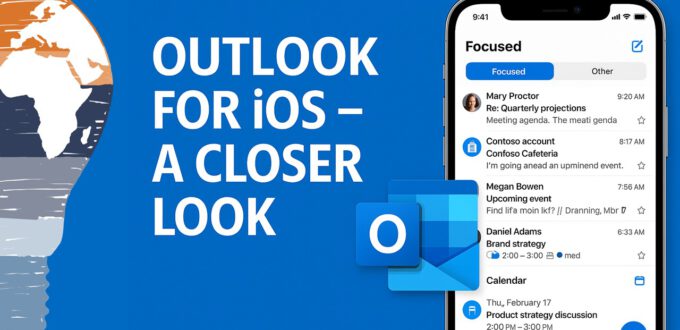
    The Outlook for iOS app was first released in mid-2015. Microsoft Outlook for iOS is based on the app from Acompli, which Microsoft purchased in late 2014. Since then, this app has developed significantly further and is probably one of the best email apps, and not just for me.

    With the Outlook app for iOS, Microsoft has taken the next step towards becoming the email and cloud provider of choice. Microsoft has been working for many years to win the hearts of users for its outstanding services through rebranding and significant functional expansions. Once Hotmail, then Windows Live Mail, the email service is now simply called Outlook and is part of the Microsoft 365 Suite offered by Microsoft to private and professionals. The Outlook app offers good ideas and great features that will particularly appeal to users of cloud services.

    (more…)

    Outlook for iOS – A Closer Look On The App


    The Outlook for iOS app was first released in mid-2015. Microsoft Outlook for iOS is based on the app from Acompli, which Microsoft purchased in late 2014. Since then, this app has developed significantly further and is probably one of the best email apps, and not just for me.

    With the Outlook app for iOS, Microsoft has taken the next step towards becoming the email and cloud provider of choice. Microsoft has been working for many years to win the hearts of users for its outstanding services through rebranding and significant functional expansions. Once Hotmail, then Windows Live Mail, the email service is now simply called Outlook and is part of the Microsoft 365 Suite offered by Microsoft to private and professionals. The Outlook app offers good ideas and great features that will particularly appeal to users of cloud services.

    (more…)
  • Outlook Mobile – Your Pocket-Sized Productivity Powerhouse

    Outlook Mobile – Your Pocket-Sized Productivity Powerhouse


    Outlook Mobile

    Your Pocket-Sized Productivity Powerhouse


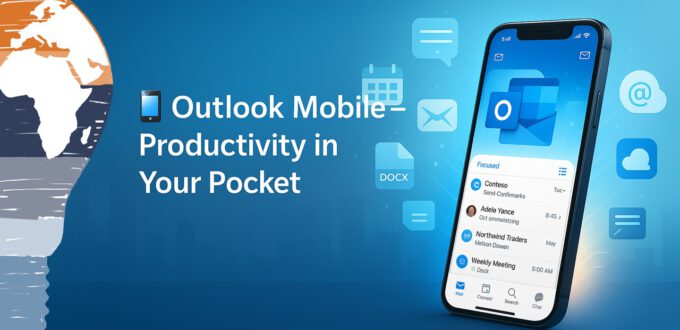
    Most of us live in Outlook all day. Email, calendar, tasks, contacts—it’s our command center. But what about when you’re away from your desk? That’s where Outlook mobile steps in. And trust me, this isn’t just a slimmed-down version of your desktop app. It’s a finely tuned productivity engine—designed for your pocket, not just ported to it.

    If you use Outlook daily on your work laptop or desktop (like I do), downloading the app on your iPhone or Android device is a no-brainer. Not just for continuity, but for game-changing features that help you stay organized, responsive, and—yes—more productive.


    📅 One App to Rule Them All: Mail, Calendar, and Files


    Forget jumping between three different apps just to confirm a meeting and send a file. Outlook mobile puts everything you need—email, calendar, contacts, and even file storage—into a single, elegant interface.

    You can easily access files stored in OneDrive, OneDrive for Business, Dropbox, Google Drive, or Box—and attach them to emails directly from within the app. Less app-hopping, more getting stuff done.


    🌟 Notifications That Actually Matter


    We all know the notification struggle. Most apps either notify too much or not enough. Outlook mobile gets it right with a feature I love: favorite contacts.

    You can mark key contacts as favorites, and then configure notifications to only alert you when an email comes from one of them. That means no more pinging for newsletters or system alerts—just the messages that matter most.

    Favorite People in your pocket Outlook

    Bonus: with one tap, you can filter your inbox to show only those favorite senders. It’s like a VIP section for your email.


    🔍 Smart Search That Thinks Ahead


    The search function in Outlook mobile is seriously underrated. It doesn’t just scan your inbox. It looks across your calendar, people, and even files stored in the cloud.

    Looking for that budget spreadsheet Sandra sent last week? Just type budget Sandra and boom—Outlook pulls up emails, attachments, calendar invites, and even shared documents from OneDrive.

    No more “where did I see that?”—just fast answers.


    📬 Focused Inbox: Zero in on What Really Matters


    Inbox overload is real. But Outlook mobile fights back with Focused Inbox—a smart filter that separates your inbox into “Focused” and “Other” tabs.

    Emails from important senders and frequently interacted contacts land in the Focused tab, while things like marketing blasts and system-generated emails wait in Other.

    You can easily move messages between the two, teaching Outlook what’s important over time. It’s like having an AI assistant who curates your inbox.


    🎯 Final Thoughts: Small App, Big Impact


    Outlook mobile isn’t just a companion to your desktop—it’s a complete productivity tool in your pocket. Whether you’re reviewing documents on the go, scheduling meetings from a taxi, or filtering your inbox during your coffee break, the app has your back.

    If you haven’t downloaded it yet, do yourself a favor and try it out. Productivity doesn’t stop when you step away from your desk—and with Outlook mobile, it doesn’t have to.

    Stay clever. Stay responsible. Stay scalable.
    Your Mr. Microsoft,
    Uwe Zabel


    🚀 Curious about mobile productivity with Microsoft 365?
    Follow my journey on zabu.cloud—where cloud, AI, and business strategy converge.
    Or ping me directly—because building the future works better as a team.

  • Developer Brings iOS Notifications to Android Wear – A Hack That Turns Heads

    Developer Brings iOS Notifications to Android Wear – A Hack That Turns Heads


    Developer Brings iOS Notifications to Android Wear – A Hack That Turns Heads


    Apple’s ecosystem walls just got a little crack. In a move that has smartwatch fans buzzing, developer Mohammad Abu-Garbeyyeh shows in a YouTube demo that iOS notifications can be displayed on an Android Wear smartwatch. Yes, you read that right: an iPhone pushing alerts directly to a Google-powered wearable.

    For years, Apple users have been told the rule is simple: if you want smartwatch notifications, you wait for the Apple Watch. Android Wear devices? Not for you. But this hack suggests another path — one where ecosystems don’t dictate every piece of hardware you own.


    Why it Matters


    In the mobile landscape, wearables are just starting to take shape. The Apple Watch looms on the horizon. Google has an entire lineup of Android Wear devices from Motorola, LG, and others. But the ecosystems don’t talk to each other — at least not officially.

    Abu-Garbeyyeh’s workaround demonstrates something users have quietly wished for: the freedom to choose the smartwatch you like, without being forced into a phone ecosystem switch.

    • Push notifications like messages, reminders, or social media alerts appear on an Android Wear watch even when paired with an iPhone.
    • This is unofficial and community-driven, not endorsed by Apple or Google.
    • It’s early-stage, which means it might break with future iOS updates — but the concept is real, and it works.

    How the Magic Works


    The developer doesn’t spill every line of code, but the logic is clear: iOS push notifications are intercepted and relayed via Bluetooth to the Android Wear device. Apple’s strict MFi program normally prevents this kind of bridge, so this hack is a creative sidestep.

    But before you imagine full smartwatch harmony, here’s the reality:

    • You can see notifications, but you likely can’t reply or control iPhone apps from the watch.
    • Advanced features like voice replies or app-level integration remain out of reach.
    • Apple could patch this at any time, given its preference for closed ecosystems.

    Still, it’s enough to get smartwatch fans dreaming.


    Why you should Care


    Let’s be real: not everyone wants the Apple Watch. Some prefer the round design of the Moto 360, the sporty vibe of the LG G Watch R, or simply want more choice. For iPhone users, being locked into one wearable feels limiting.

    This hack sparks three big ideas:

    • Device choice: iPhone owners can explore Android Wear designs without ditching iOS.
    • Competition: Cross-compatibility pushes Apple and Google to innovate harder.
    • User freedom: The more hacks like this exist, the louder the call for official solutions.

    What It Means


    Right now, buying a smartwatch means committing to a camp: Apple Watch if you’re on iOS, Android Wear if you’re on Android. But this hack hints at a different future — where the phone in your pocket and the watch on your wrist don’t have to be from the same company.

    Will Google seize the moment and release an official Android Wear iOS app? Possibly. It already brings Gmail, Google Maps, and other apps to iOS. But smartwatch-level integration is another beast. And Apple? Its business model thrives on lock-in.

    For now, it’s a tug-of-war between enthusiast hacks and ecosystem control.


    Conclusion


    Mohammad Abu-Garbeyyeh’s demo is more than a neat trick. It’s a glimpse into a world where users — not companies — define their tech combinations. For iPhone owners curious about Android Wear, it offers hope. For the industry, it signals that interoperability is not just a wish, but a demand.

    In 2015, the lines between Apple and Google’s wearable strategies are stark. But with hacks like this, those lines blur. And sometimes, the most important innovations start as a weekend experiment by a single developer.

    Would you try pairing an iPhone with Android Wear, even if it’s just for notifications? Drop a comment. This conversation is only getting started.

    Stay clever. Stay responsible. Stay scalable.
    Your Mr. Microsoft,
    Uwe Zabel


    #iOSNotifications #AndroidWear #CrossEcosystem #Hack

  • Outlook for iOS: Promise, Pushback, and a Parliamentary Pause

    Outlook for iOS: Promise, Pushback, and a Parliamentary Pause


    for iOS: Promise, Pushback, and a Parliamentary Pause


    Microsoft surprised many by releasing Outlook for iOS and Android. It wasn’t just a new app—it was essentially the rebranded Acompli client, which Microsoft had acquired only weeks earlier. The move signaled Redmond’s determination to get serious about mobile productivity beyond Windows Phone. But the rollout came with immediate friction: the IT service of the European Parliament issued a warning against installing the app, citing “serious security concerns.”


    What Happened?


    According to reports (including Golem), the EU Parliament’s IT team flagged a critical issue: the Outlook app did not connect directly to Microsoft Exchange servers. Instead, it routed emails and credentials through third-party servers hosted by Acompli. In other words, sensitive data—including usernames, passwords, and email metadata—passed through infrastructure outside of the Parliament’s direct control.

    For an institution like the European Parliament, which deals with highly sensitive communications daily, that setup was unacceptable. The recommendation was clear: block the use of the Outlook app for iOS, at least until security and compliance concerns could be addressed.


    Why This Matters


    The episode highlights the tension between innovation speed and enterprise trust. Microsoft wanted to deliver a modern, competitive mobile mail client quickly. Buying Acompli gave them a head start. But enterprises—especially in government and regulated industries—care as much about how data is handled as they do about slick new features.

    For everyday users, Outlook for iOS was an upgrade. Unified inboxes, calendar integration, and focused sorting promised to make email less painful on small screens. But for administrators, the fact that data flowed through third-party systems raised red flags. It was a reminder that mobile convenience often collides with compliance realities.


    Mobile First, Cloud First


    This clash fits neatly into Satya Nadella’s “mobile-first, cloud-first” era, which was just beginning in 2015. Microsoft was no longer building exclusively for Windows devices; the company was racing to deliver services across iOS and Android, where the users actually were. Outlook for iOS was a bold symbol of that shift.

    But speed came at a cost. Instead of building a mobile Outlook client from scratch with enterprise security controls baked in, Microsoft rebranded Acompli almost overnight. The product-market fit was strong—but the compliance story was shaky.


    Security vs. Usability: The Eternal Tug-of-War


    From a user’s perspective, the new Outlook app solved real pain points. For the first time, mobile email felt closer to the productivity tools on desktops. Calendar invites synced smoothly. Attachments were easier to manage. The interface was clean and modern.

    From an IT admin’s perspective, however, the model was risky. Routing credentials and data through third-party servers meant loss of control, unclear auditability, and potential exposure under European data protection laws. For organizations like the EU Parliament, that risk outweighed the usability gains.


    Reflections from 2015


    Looking back, the controversy was almost inevitable. When a global software vendor acquires a nimble startup, the product doesn’t magically inherit enterprise-grade security overnight. It takes time to re-engineer architectures, align with compliance frameworks, and reassure customers.

    The EU Parliament’s decision to block Outlook for iOS wasn’t about resisting innovation—it was about safeguarding sovereignty. In a way, it foreshadowed the broader European debates around data protection, sovereignty, and trust that would dominate in the years to come (hello, GDPR).


    Conclusion


    Outlook for iOS in 2015 was both a milestone and a misstep. A milestone because it marked Microsoft’s true arrival on iOS and Android, pushing productivity tools where users actually spent their time. A misstep because the underlying architecture raised legitimate security concerns, especially in sensitive environments like government.

    The lesson: innovation must walk hand in hand with trust. Enterprises will adopt new tools enthusiastically—but only if data protection and compliance are treated as first-class citizens. Microsoft eventually re-engineered Outlook Mobile to meet those standards, but in February 2015, the gap between promise and readiness was simply too wide.

    So, should you install Outlook for iOS in 2015? If you’re a casual user, the features are tempting. If you’re an enterprise, especially in the public sector, caution is wise until security concerns are resolved. After all, no app is worth compromising sensitive data.


    #Outlook #iOS #Security #Microsoft #ZabuCloud

  • OneDrive for iOS

    OneDrive for iOS


    OneDrive for iOS

    A Big Update for Photo Enthusiasts


    Yesterday, January 29, 2015, was a bustling day for Microsoft’s mobile services. While the release of the new Outlook for iOS app grabbed the spotlight, Microsoft also rolled out a significant update to OneDrive for iOS, one that will particularly delight anyone using an iPhone or iPad to capture life’s moments. Let’s dive into what’s new, why it matters for photo-happy users, and where Microsoft’s cloud strategy fits into the picture.

    (more…)

    OneDrive for iOS

    A Big Update for Photo Enthusiasts


    Yesterday, January 29, 2015, was a bustling day for Microsoft’s mobile services. While the release of the new Outlook for iOS app grabbed the spotlight, Microsoft also rolled out a significant update to OneDrive for iOS, one that will particularly delight anyone using an iPhone or iPad to capture life’s moments. Let’s dive into what’s new, why it matters for photo-happy users, and where Microsoft’s cloud strategy fits into the picture.

    (more…)